The Cover Told Me How It Ends: A 2026 Field Guide to Spoiler-Proof Comics Reading
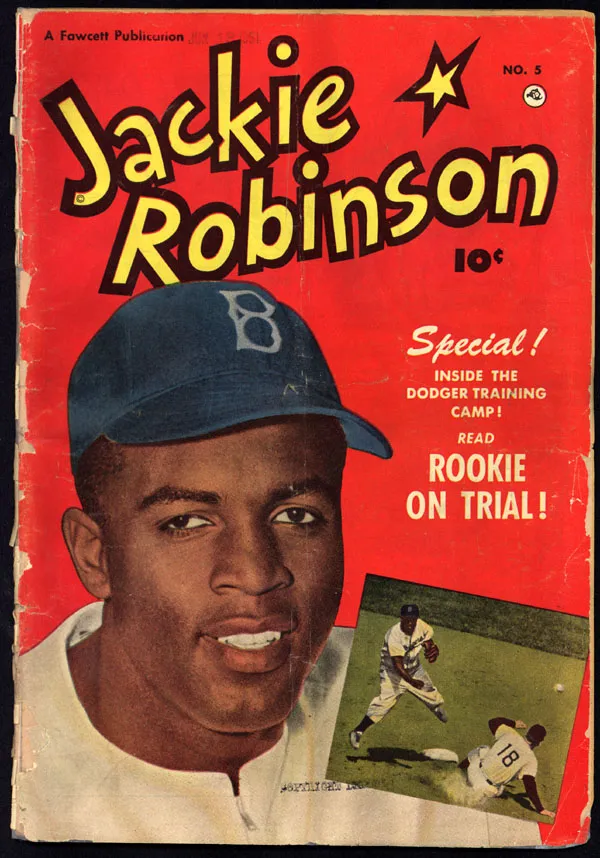
Photo: Fawcett Publications, Public domain, via Wikimedia Commons
There's a particular flavor of heartbreak that only happens in a comic shop. You're standing in the new-release wall on a Wednesday, coffee in one hand, a book in the other, and the cover is showing you a gravestone. Not a symbolic gravestone. A gravestone with a name on it. The name of a character you have loved since you were eleven. And you haven't even cracked the spine yet.
Welcome to 2026, where the cover is no longer a mood, it's a plot summary with better lighting.
The Cover as Rooftop Shouter
For most of comics history, a cover was a carnival barker: LOOK AT THIS! PUNCHING! A GORILLA! Somewhere along the way the barkers got a marketing degree and started delivering synopses. Now the cover of issue #1 shows the hero standing in the rubble of a building that hasn't fallen yet. The cover of issue #4 shows our two leads finally kissing — which, congratulations, you just spent $4.99 to watch a slow burn you already know the temperature of.
And the covers around issue #7? Somebody's getting a funeral. Flowers, black clothing, a tasteful rain effect. It's beautiful. It's also a spreadsheet with a plot point in it.
To be fair to artists — genuinely, to be fair, these people are doing career-best work — the cover is often the only piece of marketing a book gets. It's the thumbnail, the shelf-talker, the thing that stops a browser's thumb. When your book is competing with forty other spines, subtlety starts to feel like a luxury item.
But there's a difference between a cover that promises and a cover that spoils, and readers can feel it in their teeth.
Meanwhile, in the Solicitations...
Here's where the real leaking happens. Solicitation copy goes out months ahead of release — that's not a secret, that's the entire engine of the direct market. Retailers need to order. Readers need to budget. Everybody needs a Final Order Cutoff date circled on a calendar that already looks like a ransom note.
But somewhere between "here's what's in the issue" and "here's what the issue is about," the copywriter starts writing fanfiction with a deadline. Suddenly you're reading that a character "returns from the dead," that a hero "makes a choice that will change everything," that a long-lost sibling "finally steps into the light." Great. Now I know the twist, the reveal, and roughly which issue the status quo gets restored. All I'm missing is the page count.
The dead-character thing is the most egregious. Publishers have spent decades perfecting the art of the fake-out death, and then they announce the resurrection in a promo paragraph six weeks before the funeral issue ships. That's not a marketing plan, that's a magic trick where the magician shows you the coin first, then the hat, then explains the trick, then charges you for the ticket.
The Variant Industrial Complex Has a Big Mouth
Let's not let variants off the hook. A variant cover is supposed to be a costume change — the same story in a different jacket. Increasingly it's a sneak peek in a nicer hat, because variant artists get a moment from the issue and are encouraged to make it the sexiest possible moment.
So you buy the gorgeous incentive cover, and it depicts a betrayal, a kiss, a death, or a character who's supposed to be dead walking out of a hospital. The story inside is still a good story — it's just one you've already read the last page of.
Why Publishers Keep Doing This (It's Not Malice, It's Math)
Nobody at a publisher wakes up wanting to ruin your Wednesday. What they want is for a retailer to order 40% more copies, and the tool for that is a promise that something enormous happens. Vague teasing underperforms. Specific teasing sells. And in an industry running on preorders and razor-thin margins, specific always wins the meeting.
That's the tension: the same sentence that convinces a shop to double its order is the sentence that flattens your reading experience. Publishers are optimizing for the order form, not the armchair.
The Spoiler-Proof Pull List: A Five-Step Protocol
You can't fix the industry from your couch, but you can absolutely defend your own reading experience. Here's the protocol.
- Mute the hype, keep the calendar. Follow a solicitation aggregator for dates only. Set your Final Order Cutoff reminders, then close the tab before your eyes drift to the synopsis.
- Ask your shop for a no-spoiler pull. Plenty of retailers will happily bag your books facedown or skip the promo chatter. Ask once, and it's handled forever. Your friendly local comic guy has heard weirder requests — trust me.
- Read the credits page last. Or honestly, not at all. Artist and writer credits are a delight, but the credits page is also where the cover blurb goes to repeat itself.
- Skip the letters column until you're done. Readers write in about things that already happened. They are very excited. They are very spoiled.
- Judge a book by its interior. If a cover has told you too much, flip to the back matter and check the next-issue teaser before committing. It's the only preview that respects you.
The Modest Ask
Here's the fan-friendly case, and it's a short one: tease the vibe, not the verdict. Show me a mood, a silhouette, a color palette that makes me feel like something is wrong in a way I can't name. Show me a hand holding something I don't recognize. Give me mystery as a feature, not a gap in the marketing copy.
The best covers in comics history didn't spoil anything — they made you need the answer. That's not nostalgia, that's craft. And it's still available. It just needs to get out of the meeting with a win once in a while.
The Part Where I Admit I Bought It Anyway
I bought the funeral book. Of course I did. It was gorgeous, it was by a creative team I trust, and I wanted to know how they'd get there. The issue was great. I still would've liked to find out on page 19 instead of on the shelf.
So here's to 2026: may your variants be tasteful, your FOC reminders early, and your covers mysterious enough to earn the six bucks. We'll keep reading either way. We'd just like to be surprised once in a while — which, historically, is the whole reason we show up on Wednesdays.