The Page That Broke the Dam: Six Comic Creators on the Moment They Became Lifelong Fans
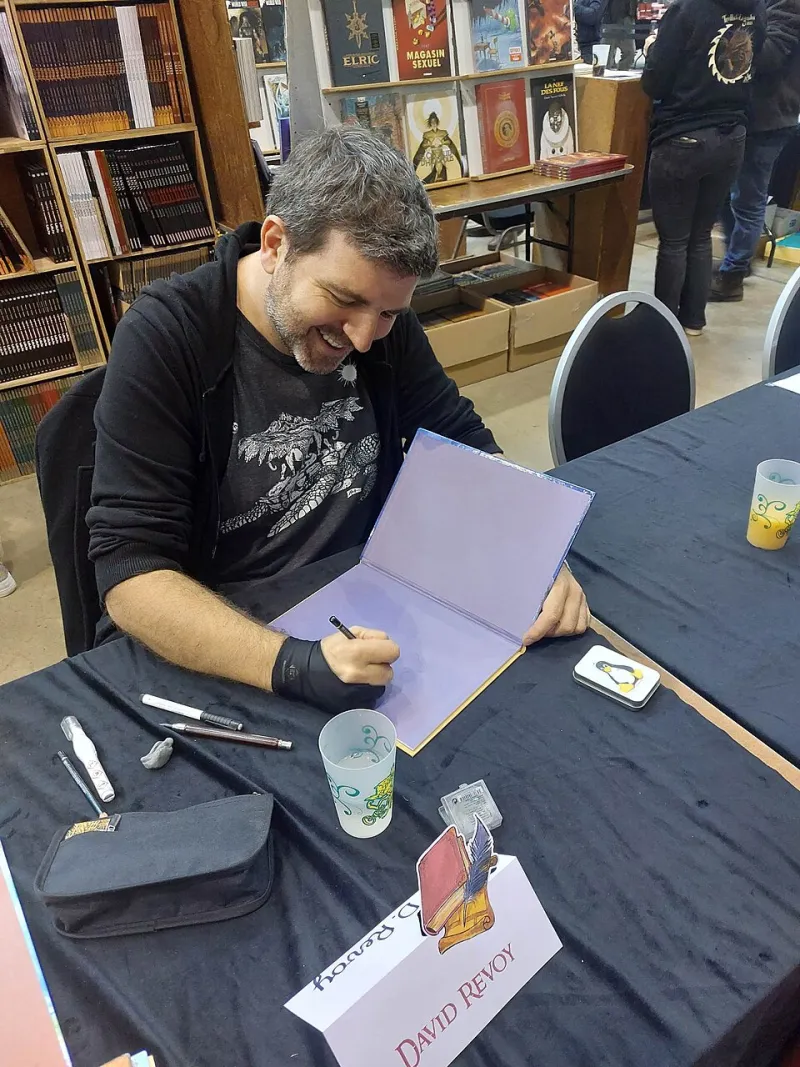
Photo: Steph Vesch, CC BY 4.0, via Wikimedia Commons
Some comics fans have an origin story. Not the radioactive-spider kind---the page kind. The single page that made them stop reading in a hallway and start reading for life.
For this LetComic oral history, we asked six working creators to name the one page that converted them. Their tastes run from superhero spectacle to indie memoir to horror. The pages are different. The feeling is not. We let each creator describe the page, then we unpack why it works and pair it with a modern recommendation for readers chasing the same spark.
1. Lena Ortiz on Uncanny X-Men #137
Lena Ortiz writes and draws the sci-fi series Neon Saints. Her page: the moon-side finale of the Dark Phoenix Saga, when Jean Grey stands apart from the X-Men and makes a choice that costs everything.
'What got me was not the big fight,' Ortiz says. 'It was the quiet panel after. Scott's hand is open, and Jean is not reaching back. The page uses white space like a held breath. I remember thinking, Oh, comics can do silence.'
Why it lands: The page trusts the reader to feel the gap between panels. The action is operatic, but the emotion is in what is withheld.
Modern match: House of X/Powers of X by Jonathan Hickman, for the same sense of a superhero story operating at cosmic scale while keeping one relationship at the center.
2. Marcus Bell on Love and Rockets
Marcus Bell is the cartoonist behind Corner Store Cowboys, a slice-of-life series about a family-run shop. His page: a rooftop conversation between Maggie and Hopey in Jaime Hernandez's Love and Rockets, where the two characters talk around the thing they cannot say.
'I did not know comics could be this casual,' Bell says. 'Nobody is punching anybody. They are just standing there, and the body language is doing the whole plot. That page taught me that a comic can be about a look.'
Why it lands: The composition is loose but exact---elbows, cigarettes, distance. The dialogue sounds overheard. It is a masterclass in letting character history fill the gutter.
Modern match: Chef's Kiss by Jarrett Melendez and Danica Brine, for a romance that lives in gestures, shifts, and the terror of saying the true thing.
3. Priya Desai on Persepolis
Priya Desai writes The Last Rickshaw, a historical fantasy series. Her page: the moment in Marjane Satrapi's Persepolis when young Marjane imagines herself as a prophet, surrounded by her own drawings and rules.
'I was a kid who drew to make sense of a world that did not make sense,' Desai says. 'That page is funny and serious at once. It does not talk down to children, and it does not turn Iran into a lesson. It just lets a girl be huge in her own imagination.'
Why it lands: The page uses childlike geometry without childishness. The black-and-white panels flatten the visual field, so the reader sees the world the way Marjane does---a place where the personal and the political occupy the same frame.
Modern match: The Best We Could Do by Thi Bui, for a family memoir that moves between a child's memory and an adult's reckoning.
4. Jonah Pike on Swamp Thing #21
Jonah Pike is a horror artist whose work appears in anthologies and his own zine, Wet Rot. His page: the reveal in Alan Moore and Stephen Bissette's 'The Anatomy Lesson,' where Swamp Thing learns he is not Alec Holland.
'That page is a door closing,' Pike says. 'You think the horror is the monster. Then the monster finds out he is not the man he thought he was. The panel where he is alone with that information? That is the scariest thing I have ever seen in a comic. No gore required.'
Why it lands: The horror is conceptual. The page uses close-ups and negative space to make identity itself the threat. The reader has to sit in the same emptiness as the character.
Modern match: The Low, Low Woods by Carmen Maria Machado and DaNi, for body horror that is also about what a town chooses to forget.
5. Tessa Nguyen on Hawkeye #11
Tessa Nguyen is a colorist and artist who works on superhero and indie books. Her page: the Pizza Dog issue of Matt Fraction and David Aja's Hawkeye, specifically a page told from the dog's point of view.
'I had read comics before,' Nguyen says. 'That page made me a fan. It is a gimmick, but it is a gimmick with a heart. You have to decode the symbols. You have to pay attention. It made me feel like the comic was talking to me in a secret language.'
Why it lands: The page turns reading into play. The visual vocabulary is restricted, so every shape and color carries extra weight. It is funny, sad, and formally daring all at once.
Modern match: The Vision by Tom King and Gabriel Hernandez Walta, for a superhero book that uses domesticity and strange point-of-view choices to get at something raw.
6. Andre Wallace on Batman: Year One
Andre Wallace writes superhero comics and teaches a comics workshop. His page: the sequence in Batman: Year One where Bruce Wayne returns to Gotham and the city seems to swallow him.
'It was the rain,' Wallace says. 'The rain, the rooftops, the lettering. The page made Gotham feel like a character with a bad mood. I did not care about Batman before that. After that page, I cared about the city.'
Why it lands: The page uses repetition and silhouette to build atmosphere. It is not about the costume; it is about place. The storytelling is so clean that a reader can feel the cold through the paper.
Modern match: The Good Asian by Pornsak Pichetshote and Alexandre Tefenkgi, for a crime story where the setting is as alive and guilty as any person in it.
Why the one page still matters
A single page can do the work of a whole preview. It can teach a new reader how to look, how to slow down, how to hear the silence between panels. The creators above did not become fans because a comic explained its universe. They became fans because a page made them feel something they could not get anywhere else.
That is the pitch for the skeptic in your life, too. You do not need to start with a whole shelf. Start with one page. Then hand them the book.
LetComic will keep asking creators for the page that broke the dam. If you have one, tell us. We are pros at making a pull list out of a feeling.