Ka-Boom Is a Lifestyle: The Letterers Who Taught America to Talk in Sound Effects

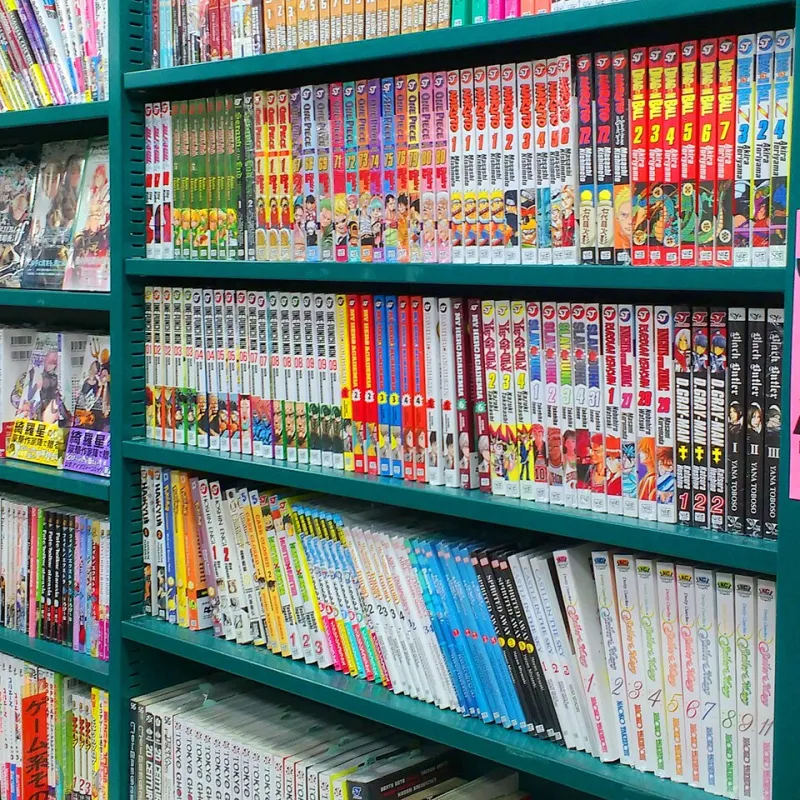
Photo: Laitche, CC BY-SA 4.0, via Wikimedia Commons
There is a specific kind of person who, upon sealing a Ziploc bag, whispers thwip under their breath. You know at least one. You may be one. No judgment here—this is a safe space, and the door is sealed with a satisfying FWUMP.
We treat comic sound effects like they fell out of the sky. They didn't. Every THWIP, every SNIKT, every BAMF was a decision made by a human being with a pen, a deadline, and an art director breathing down their neck. So before we get to the fun part—the part where we rank noises by how often we embarrass ourselves saying them in public—let's give the letterers their flowers.
First, a Moment of Silence for the People Who Draw the Screaming
Lettering is the invisible job. When it's great, nobody notices; when it's bad, it's the only thing anyone talks about. Ask a casual reader who lettered The Dark Knight Returns and you'll get a blank stare and a change of subject. Ask a letterer and you'll get a twenty-minute lecture, delivered with love.
Sound effects—the industry calls them 'SFX' when they're being efficient and 'the fun stuff' when they're being honest—are usually drawn, not typed. That means the shape of the word is doing emotional work. The letters get fat when something hits hard. They get spindly and jagged when something tears. They bleed outside the panel border if the noise is too big to contain, a trick that functions as a visual punchline and a physical one at the same time.
It's also a craft with a lineage. The mid-century DC bullpens had guys cranking out balloons at industrial speed, and the best of them—Gaspar Saladino comes up in every conversation about this, and deservedly so—treated a stray 'ZAP' like a logo redesign. Later generations pushed it further: Todd Klein bending lettering into the architecture of a dream, Richard Starkings and the Comicraft crew building whole typefaces out of a single editorial need, John Workman making a sound effect feel like a drum fill.
None of them got a movie deal out of it. All of them changed how you read.
The Anatomy of a THWIP
The great ones are not onomatopoeia in the dictionary sense. A real web-shooter would sound like a sneeze caught in a door hinge. THWIP is a lie, and it's a better lie than the truth. It has a soft launch, a hard snap, and a little air leaking out the back end—'th' for the tension, 'wip' for the release. Say it out loud. Your mouth knows what Spider-Man is doing.
SNIKT is even stranger. Three metal claws, and the word has one syllable of pure friction and a hard stop like a drawer slamming. It's a sound that only exists in a universe where adamantium is real, and yet children who have never read a single X-Men comic can produce it on demand, usually while threatening a sibling.
And then there's BAMF, which is the crowning achievement of the whole enterprise: a word that means teleportation, smells faintly of sulfur, and doubles as an insult. That's efficiency. That's design. Somewhere a branding agency is furious they didn't get there first.
Why Your Brain Keeps the Weird Ones
The stickiness is not an accident of nostalgia. It's linguistics doing its job. The sounds that survive tend to have a plosive at the front and a fricative at the back, which is a fancy way of saying your mouth gets to pop and hiss in the same breath. They're short. They're physical. They don't require you to remember a story, just a mouthfeel.
They also tend to be drawn by the same handful of artists for decades, which cements the letterform itself into memory. A 'KA-POW' in 1966 and a 'KA-POW' in 2026 might not share a single pixel, but they share a silhouette, and your brain clocks it in less time than it takes to read the word 'the.'
There's a nostalgia layer too, obviously. Half of us learned to read from these books, and the sound effects were the part that didn't require vocabulary. They were the picture version of a word. Twenty years later your hands still type 'thwip' into a group chat when someone sends a link at 2 a.m.
The Ones We Say Out Loud (A Totally Unnecessary Taxonomy)
After informal polling of friends, coworkers, and one very patient barista, here's the honest state of the union:
Tier One, Universal: THWIP. Everyone does it. Web-swinging a shopping bag across the kitchen counts.
Tier Two, Comic-Shop Certified: SNIKT and BAMF. These are friendship handshakes. You deploy one, you find your people.
Tier Three, Deep Bench: KRAKOOM, SKREEE, VWOOMP, BUDDA-BUDDA. These belong to readers who own more longboxes than shelving. They are also the best ones, and it is a crime that 'KRAKOOM' has never trended.
Tier Four, Mystifying: Whatever your uncle says when he wins a hand of cards. Nobody has ever found the source material.
How to Hear the Invisible Hand
The next time you're flipping through a fight scene and something goes BOOM in a way that feels right—not just loud, but correctly loud, with the letters swelling into the gutter and one letter knocked loose like debris—look down at the credits page. Somebody made that call. Somebody spent forty minutes on the spacing of two letters that you read in half a second.
The comics industry has spent decades arguing about who deserves credit for a great page. The writer plotted it, the penciller staged it, the inker gave it weight, the colorist gave it weather. The letterer gave it a voice, and in the case of a truly great sound effect, they gave it a word that your mouth will still be using long after you've forgotten the plot.
So say the thing. Say it a little. TWIP your package into the recycling bin. BAMF out of a meeting that could have been an email. Just maybe not during the quiet part of a funeral, or on the bus, or—speaking from experience—while standing behind someone at the DMV who does not share your hobby.
The letterers already did the hard part. The least we can do is embarrass ourselves with their work.